Small Kitchen Storage Ideas That Don’t Waste Counter Space
In a small kitchen, counter space is not decoration space. It is working space.
When counters become permanent storage for appliances, papers, utensils, food, and containers, even a functional kitchen can start to feel much smaller than it really is.
The goal is not to hide every object. It is to keep the most useful surfaces available for preparing food, setting down groceries, washing dishes, and doing the everyday work of the kitchen.
A good small-kitchen system asks one question before adding storage: can this item live somewhere that does not take away from the space I need to cook?
If your entire home feels short on space, start with our small home organization ideas pillar guide. If the kitchen contains too much rather than too little storage, use the step-by-step decluttering plan first.
Key Takeaways
- Keep only truly frequent-use items on the counter.
- Improve cabinets and drawers before adding another cart or freestanding shelf.
- Use walls, doors, and vertical storage selectively so the kitchen does not feel visually crowded.
- Protect clear landing zones near the sink, stove, and refrigerator.
- Measure first and buy storage only for a specific problem.
Table of Contents
- Treat Counter Space as Work Space
- 1. Remove What Does Not Earn Counter Space
- 2. Build Storage Around Everyday Kitchen Zones
- 3. Use Vertical Space Without Covering Every Wall
- 4. Make Cabinets Work Harder Before Adding Furniture
- 5. Use Drawers for More Than Flat Storage
- 6. Use Cabinet Doors and Appliance Sides Carefully
- 7. Protect Your Sink, Stove, and Fridge Landing Zones
- 8. Move Occasional Items Out of Prime Storage
- 9. Add Mobile Storage Only When It Solves a Real Problem
- Small-Kitchen Storage Checklist
- Common Small-Kitchen Storage Mistakes
- Frequently Asked Questions
Treat Counter Space as Work Space
The easiest way to judge a small kitchen is to look at what the counters are doing. If every surface is occupied, the kitchen may have plenty of storage products and still be difficult to use.
Start by identifying the tasks that actually happen on each stretch of counter. You may need room for chopping near the stove, unloading groceries near the refrigerator, drying dishes near the sink, or making coffee in one compact zone.
The goal is not a completely empty counter. It is enough clear space to perform the routine without moving five objects first.
1. Remove What Does Not Earn Counter Space
Counter space should go to items that are used often enough to justify being visible and immediately accessible.
A coffee maker used every morning may deserve a permanent spot. A blender used twice a month probably does not. The same logic applies to decorative bowls, knife blocks, utensil crocks, supplements, mail, small appliances, and pantry items that migrate onto the counter.
Do a quick review and ask what you have actually used during the last several days. Anything that does not support a frequent routine becomes a candidate for a drawer, cabinet, pantry, nearby storage area, or decluttering decision.
Quick Tip
Use a one-week countertop test.
Move questionable items off the counter for one week. If you repeatedly reach for something, it may deserve a convenient place. If you barely notice it is gone, prime counter space is probably not its best home.
2. Build Storage Around Everyday Kitchen Zones
Small kitchens work better when frequently used items live near the task they support.
Keep the coffee supplies close to the coffee maker. Store everyday cooking tools near the stove. Keep food-prep knives, boards, and mixing tools near your main prep area. Put dishwashing supplies near the sink.
Zones reduce unnecessary movement and stop one category from spreading across several cabinets.
Keep each zone compact. A coffee routine does not need an entire counter if the mugs and supplies can live directly above or below the machine.
3. Use Vertical Space Without Covering Every Wall
A small kitchen often has more usable height than usable floor area. That makes vertical storage valuable, but it should be used with restraint.
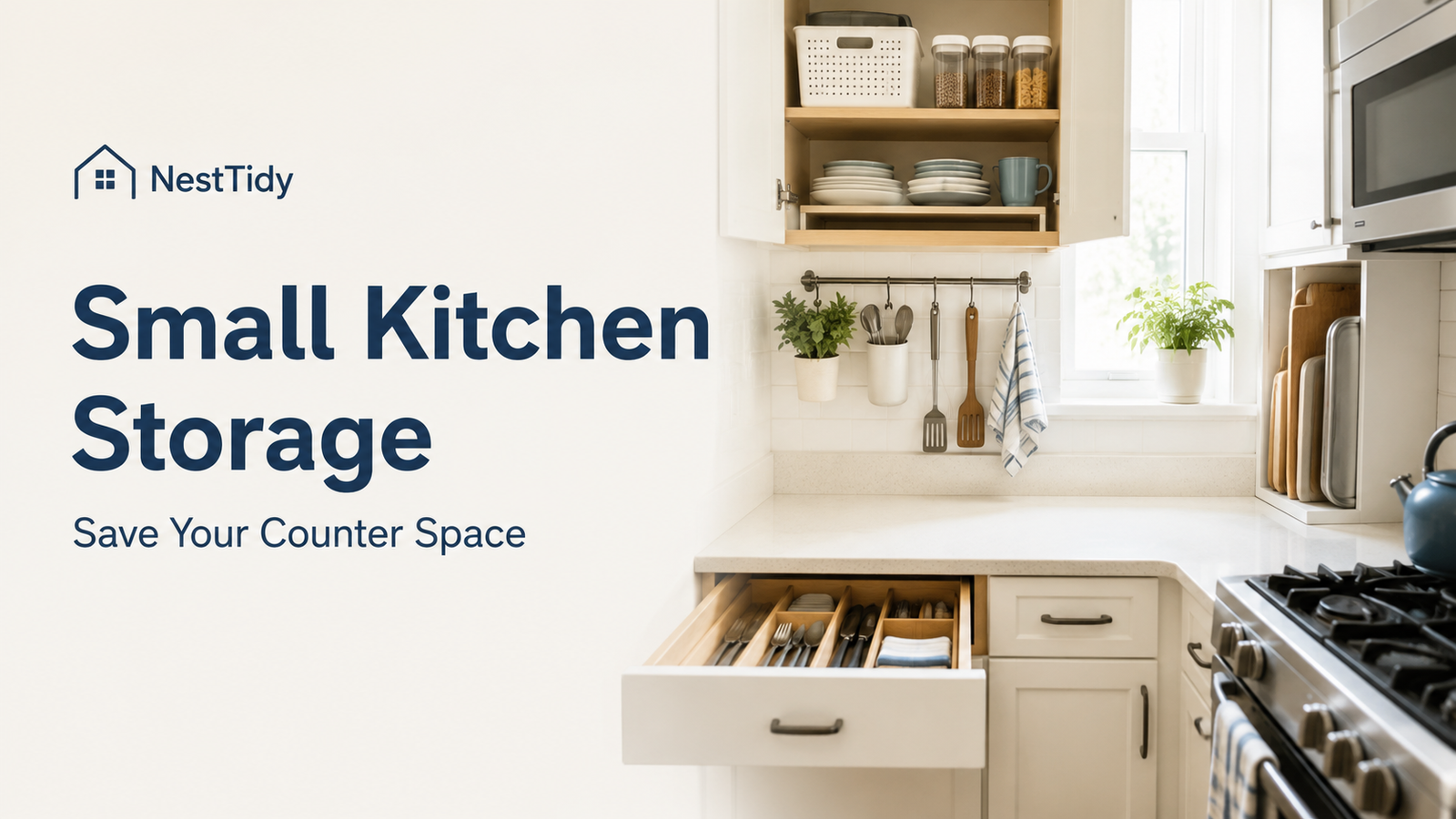
Good options can include an extra shelf inside a tall cabinet, shelf risers, a narrow rail for a few frequently used utensils, a magnetic strip where appropriate, or storage above existing cabinets for low-frequency items.
Open storage creates visual noise quickly in a compact room. If every wall becomes a rack, pegboard, shelf, and hook system, the kitchen may technically hold more while feeling more crowded.
Use vertical storage where it improves access or frees a work surface. Leave the rest visually quiet.
4. Make Cabinets Work Harder Before Adding Furniture
Before buying a rolling cart or another shelving unit, check whether your existing cabinets are using their full height and depth.
- adjust shelves so there is less wasted vertical space
- use a simple riser when stacked dishes leave a large empty gap above them
- store baking sheets and cutting boards vertically instead of in a flat pile
- group small pantry items so they do not disappear behind larger packages
- reserve deep cabinet space for categories that can actually use the depth
- keep frequently used items toward the front and occasional items higher or farther back
The objective is not to pack every cabinet tightly. It is to make each shelf easier to see and easier to reset.
5. Use Drawers for More Than Flat Storage
Drawers can protect counter space because they keep frequently used tools close without keeping them visible.
Deep drawers can often hold containers, pots, bowls, or pantry categories. Narrow drawers can hold cooking tools, wraps, towels, or small food-storage items. Dividers are useful when they prevent categories from mixing, but they are not required in every drawer.
Store awkward items vertically when that improves access. Lids, cutting boards, baking sheets, and trays are often easier to grab when they are not buried under a stack.
6. Use Cabinet Doors and Appliance Sides Carefully
The inside of a cabinet door, the side of a refrigerator, or another vertical surface can hold lightweight items without taking up counter space.
Examples can include a small hook for a towel, a lightweight organizer for wraps, a magnetic notepad, or a narrow rack for a very specific category.
Check clearance before installing anything. A door organizer that blocks shelves, prevents a cabinet from closing, or makes items difficult to reach has created a new problem.
7. Protect Your Sink, Stove, and Fridge Landing Zones
Three places benefit from permanent breathing room: beside the sink, near the stove, and close to the refrigerator.
You need somewhere to place a hot pan, set down groceries, stack a few dishes, or move ingredients during cooking. If those landing zones are covered with permanent storage, every routine becomes harder.
Try to keep at least one usable section clear around your main work points. In a very small kitchen, this may be more valuable than adding another storage product.
8. Move Occasional Items Out of Prime Storage
Prime kitchen storage should go to the items that support everyday cooking and cleanup.
Specialty baking equipment, holiday serving pieces, large appliances used a few times a year, and duplicate entertaining supplies may not need to live beside your daily dishes.
If appropriate for your home, less-used kitchen items can move to a higher cabinet, pantry shelf, dining-room cabinet, utility closet, or another dry and safe storage area.
Prime storage is valuable. Spend it on frequency of use, not on the fact that an item happens to belong to the kitchen category.
9. Add Mobile Storage Only When It Solves a Real Problem
A slim rolling cart or small movable island can work well when the kitchen genuinely lacks both storage and temporary work surface.
But a cart also occupies floor space and affects the route through the room. Measure the walkway with the cart in place, not just the empty gap where it will sit.
If the cart forces you to squeeze past it, blocks a cabinet, or becomes a dumping surface, it is not creating useful space.
Small-Kitchen Storage Checklist
Before You Buy Anything
- Clear obvious countertop clutter.
- Declutter duplicate or unused kitchen items.
- Identify the exact counter space you need for food prep and daily routines.
- Check unused height inside cabinets.
- Review drawer layouts and cabinet-door clearance.
- Measure the exact width, depth, and height of the problem area.
For Everyday Storage
- Keep daily-use items close to the task they support.
- Move low-frequency appliances off the counter.
- Store boards, trays, and lids vertically when practical.
- Protect at least one clear landing zone.
- Keep categories small enough to reset easily.
- Leave some empty capacity in drawers and cabinets.
Common Small-Kitchen Storage Mistakes
1. Treating the Counter as the Default Home for Everything
The counter is the easiest place to put something down, which is exactly why it needs stronger boundaries.
2. Buying Organizers Before Decluttering
New containers cannot fix a cabinet that simply holds too many items.
3. Filling Every Wall With Open Storage
Vertical storage can save space, but too much visible storage makes a compact kitchen feel busier.
4. Ignoring Cabinet Height
Large gaps above dishes or pantry items often indicate that a shelf position or simple riser could improve the space.
5. Using Deep Storage Without Access
If you have to remove several items to reach the back, the system may need grouping, pull-forward storage, or a different category.
6. Adding a Cart Without Measuring the Walkway
A cart only helps when it improves storage without making movement through the kitchen harder.
7. Storing Occasional Items in Prime Space
The most accessible shelves and drawers should support the routines you use most.
Frequently Asked Questions
How do I add storage to a small kitchen without losing counter space?
Start with cabinets, drawers, cabinet doors, vertical space, and less-used storage zones before adding anything that sits on the counter or floor. The best solution improves access while protecting the work surface.
What should stay on a small kitchen counter?
Keep items that are used frequently enough to justify immediate access, such as a daily coffee maker or a small set of cooking tools. Move occasional appliances, paperwork, duplicate tools, and pantry overflow elsewhere.
Are open shelves good for a small kitchen?
They can be useful for a limited number of frequently used or attractive items, but too much open storage can make a small kitchen feel visually crowded. Use them selectively.
How can I use kitchen cabinets more efficiently?
Adjust shelf heights, use available vertical space, group small categories, store flat items vertically when helpful, and keep daily-use items easier to reach than occasional items.
Should I buy a rolling cart for a small kitchen?
Only if it solves a specific storage or work-surface problem and still leaves comfortable clearance for doors, cabinets, appliances, and walkways. Measure the room with the cart footprint included.
How do I keep kitchen counters from getting cluttered again?
Give common drop-zone items a different home, keep only frequent-use kitchen items on the counter, and do a quick reset when cooking or cleaning so temporary items do not become permanent storage.
Protect the Space You Actually Use
A small kitchen does not need to hold less function. It needs storage that respects the work happening in the room.
Start with what is already there. Reduce the volume, improve cabinets and drawers, use vertical space selectively, and keep the counter available for the tasks that cannot happen anywhere else.
The goal is not an empty kitchen. It is a kitchen where you can cook without clearing a workspace first.