
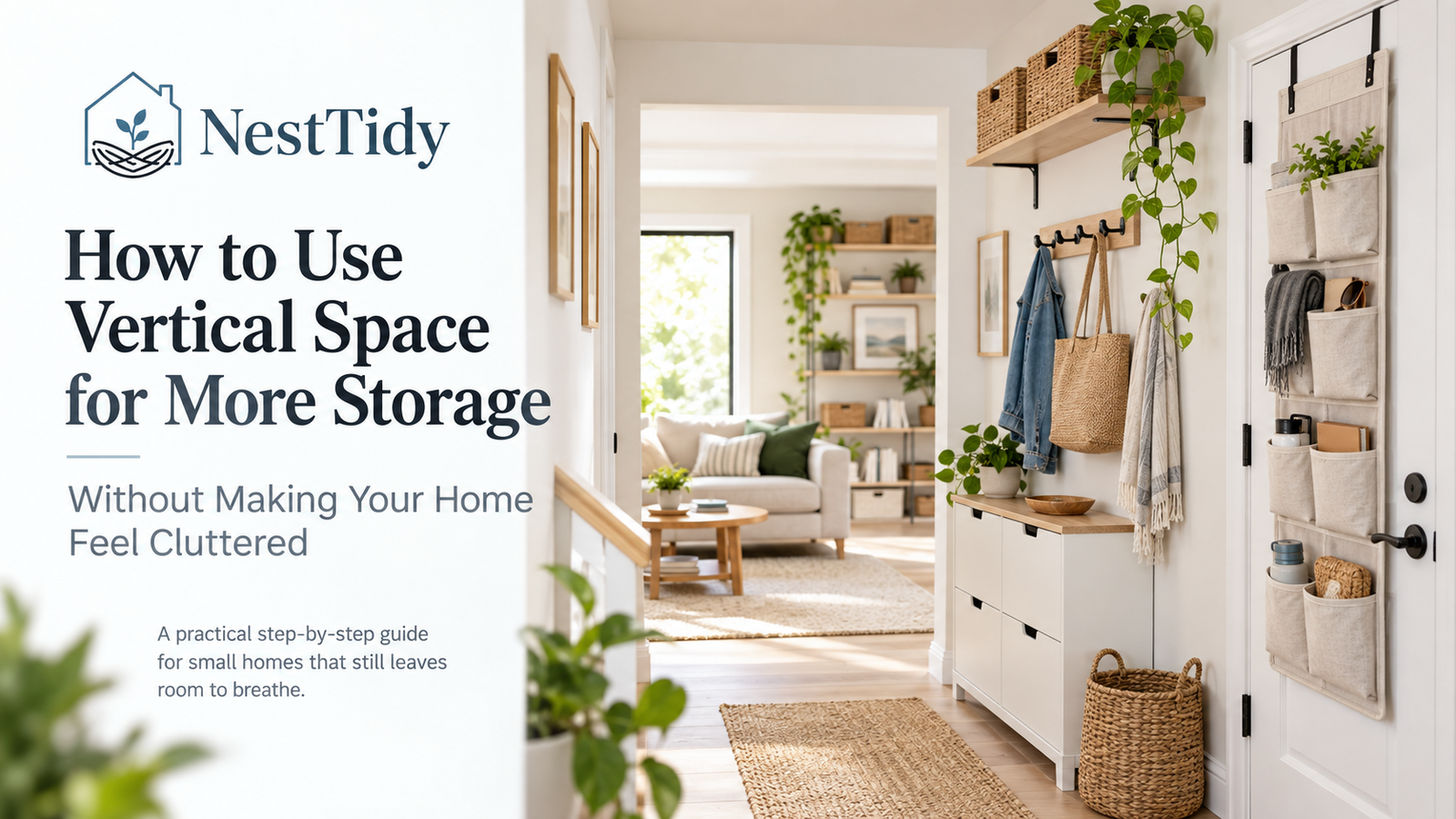
How to Use Vertical Space for More Storage Without Making Your Home Feel Cluttered
When a home feels short on space, the first instinct is often to add more storage on the floor. Another cart, another basket, another cabinet. But that usually makes a small room feel tighter, not better. A better approach is to look up. Walls, doors, cabinet interiors, corners, and the space above existing furniture can all create useful storage without taking up more square footage. The key is using vertical space on purpose, not simply filling every empty spot you see.
Cost
Varies
Time
30–90 min per area
Difficulty
Easy
Renter Friendly
Yes
Why Vertical Storage Works
Vertical storage makes use of space that often goes ignored. Many homes are not actually out of room; they are simply using too much of their storage at eye level and below.
The goal is not to cover every surface with shelves and hooks. It is to create a little more capacity where it improves the way the room works while leaving enough visual breathing room for the space to still feel calm.
Quick Answer
The easiest way to use vertical space well is to identify where clutter is building up, then choose the smallest vertical solution that fixes that problem. Use walls, doors, cabinet interiors, narrow gaps, and the space above furniture where they help, but keep daily-use items within easy reach and avoid filling every empty wall just because it exists.
Before You Start
Before adding anything, take a few minutes to look at the room honestly. Ask what keeps ending up on the floor or countertop, what feels hard to put away, which storage areas feel too full, and which walls, doors, or upper spaces are currently doing nothing.
More storage is only useful if it makes the room easier to use. If a solution adds visual clutter, blocks movement, or makes everyday items harder to reach, it is not really helping.
01
Notice Where Clutter Keeps Collecting
Start with the real problem, not the product.
Maybe mail and keys pile up near the entryway. Maybe bathroom products crowd the sink. Maybe pantry items are stacked too tightly in a cabinet. Maybe bags and jackets always end up on a chair.
Those repeated clutter patterns tell you what kind of storage the room actually needs. Do a quick walk-through and notice where things consistently land when they do not have a clear home.
Done when: you can clearly name one or two clutter problems you want vertical storage to solve.
02
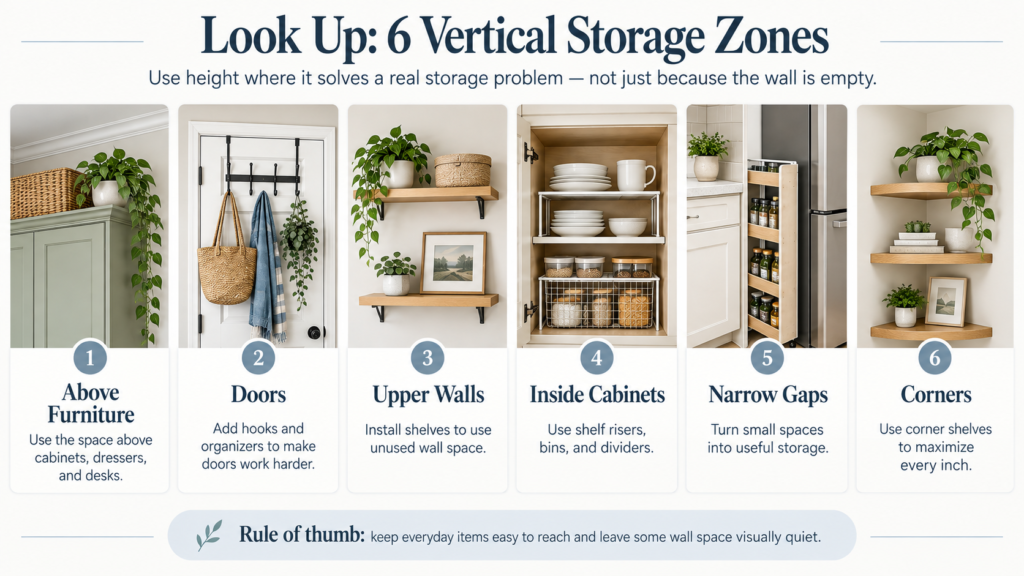
Find Your Vertical Storage Zones
Look for the places where height can genuinely help.
The most common zones are above furniture, doors, upper wall space, inside cabinets and closets, narrow gaps, and corners. Not every room needs all six. Usually one or two will be much more useful than the others.
Done when: you know which vertical zones actually make sense in the room.
03
Use the Space Above Existing Furniture
Add storage without adding another piece to the floor.
Look above dressers, cabinets, desks, console tables, the toilet, and laundry machines. A shelf above a dresser can hold baskets or less-used items, while a shelf above a desk can free up working space.
Keep the depth reasonable so shelving does not make the room feel heavier or interfere with movement.
NestTidy Tip
Use higher shelves for lighter, less-used things rather than daily items you need constantly.
Done when: you have identified at least one area above existing furniture that can add useful storage without crowding the room.
04
Make Doors Work Harder
Use one of the most overlooked storage surfaces in the home.
Over-the-door organizers, slim hanging baskets, and simple hooks can work well for shoes, cleaning supplies, pantry items, accessories, toiletries, bags, towels, or robes.
Before buying anything, check the door thickness and clearance. A useful organizer becomes frustrating if the door no longer opens and closes freely.
Done when: you know whether one door in the room can solve a real storage problem.
05
Take Storage Higher Up the Wall
Use height instead of spreading more furniture around the room.
Tall shelving, floating shelves, narrow bookcases, rails, or pegboards can move storage upward. Keep the easiest-to-reach levels for daily-use items and reserve upper levels for lighter, occasional-use categories.
Resist the urge to fill the entire wall. Blank space helps a small room feel calmer.
Done when: wall storage adds function without making the room look overloaded.
06
Think Vertically Inside Cabinets and Closets
Use the empty height you already have.
Cabinets and closets often waste space between shelves. Shelf risers, stackable bins, dividers, hanging closet organizers, or under-shelf baskets can create another usable level.
The goal is visibility and access, not maximum stacking. If you need to move several containers every time you want one item, the system is creating extra work.
Done when: at least one cabinet or closet uses its height more clearly than before.
07
Use Narrow Gaps and Corners Carefully
Turn awkward spaces into storage only when it improves the room.
Look beside the refrigerator, next to cabinets or wardrobes, at the end of a kitchen run, or in a corner that could hold a slim shelf. Rolling carts and narrow vertical units can work well in these spaces.
Do not force storage into every gap. If a piece blocks movement, makes cleaning harder, or looks squeezed in, it is not worth it.
Done when: you have chosen only the narrow-gap or corner solutions that genuinely improve function.
08
Keep Everyday Items Easy to Reach
Vertical storage should support your routine, not complicate it.
- Keep daily items within comfortable reach.
- Keep heavier items lower whenever practical.
- Move lighter and less-used items higher.
If you need a step stool several times a day for a commonly used item, that storage choice probably needs rethinking.
Done when: the things you use most are still convenient to grab and put away.
09
Choose Renter-Friendly Options If Needed
Make the storage fit your living situation as well as the room.
Over-the-door organizers, tall freestanding shelves, removable hooks for appropriate light items, and some tension-based systems can add vertical storage without permanent drilling.
Always follow the product instructions and the rules of your lease. Adhesive products are not automatically damage-free, and their holding strength depends on the surface, preparation, weight, and product design.
Done when: the solution fits both the room and the restrictions of your home.
10
Edit Back Anything That Feels Visually Busy
More capacity is not automatically a better room.
After adding vertical storage, step back and look at the space again. If it feels crowded or visually noisy, remove one shelf, reduce what stays on display, move mixed small items into bins, or leave one area intentionally blank.
Just because a space can hold storage does not mean it should.
Done when: the room feels more useful without feeling more crowded.
Mistakes to Avoid
- Buying storage before identifying the problem. Start with the clutter pattern, then choose a solution.
- Using every empty wall. More storage can create more visual noise.
- Putting daily items too high. Storage is not useful if everyday access becomes annoying.
- Ignoring depth and clearance. A shelf or organizer can still make a small room feel tighter.
- Overloading wall or door storage. Follow manufacturer limits and mounting guidance.
- Creating storage for things you no longer need. Vertical storage does not replace decluttering.
Frequently Asked Questions
What is the best way to add storage to a small home?
Start with a specific clutter problem, then choose the smallest storage solution that fixes it. Vertical space often helps because it adds function without taking up more floor area.
What should go on high shelves?
High shelves are best for lighter, less-used items such as seasonal decor, extra paper goods, spare toiletries, backup pantry items, or additional linens.
Can vertical storage make a room look cluttered?
Yes. Too many shelves, hooks, or visible bins can make a small room feel busier. Leave some wall space visually quiet and use closed storage for categories that become messy quickly.
What are good renter-friendly vertical storage ideas?
Over-the-door organizers, tall freestanding shelves, removable hooks for appropriate light items, and some tension-based systems can work without permanent drilling. Always check your lease and product instructions.
Should I use open shelves or closed storage?
Open shelves work well for visually simple categories such as books, baskets, dishes, or folded towels. Closed storage is usually easier for mixed small items, toiletries, paperwork, cords, or cleaning supplies.
Take the Next Useful Step
A small home does not need storage everywhere. It needs useful storage in the right places.
If you want to keep improving the space you already have, continue with Small Home Organization Ideas That Make the Most of Limited Space.


