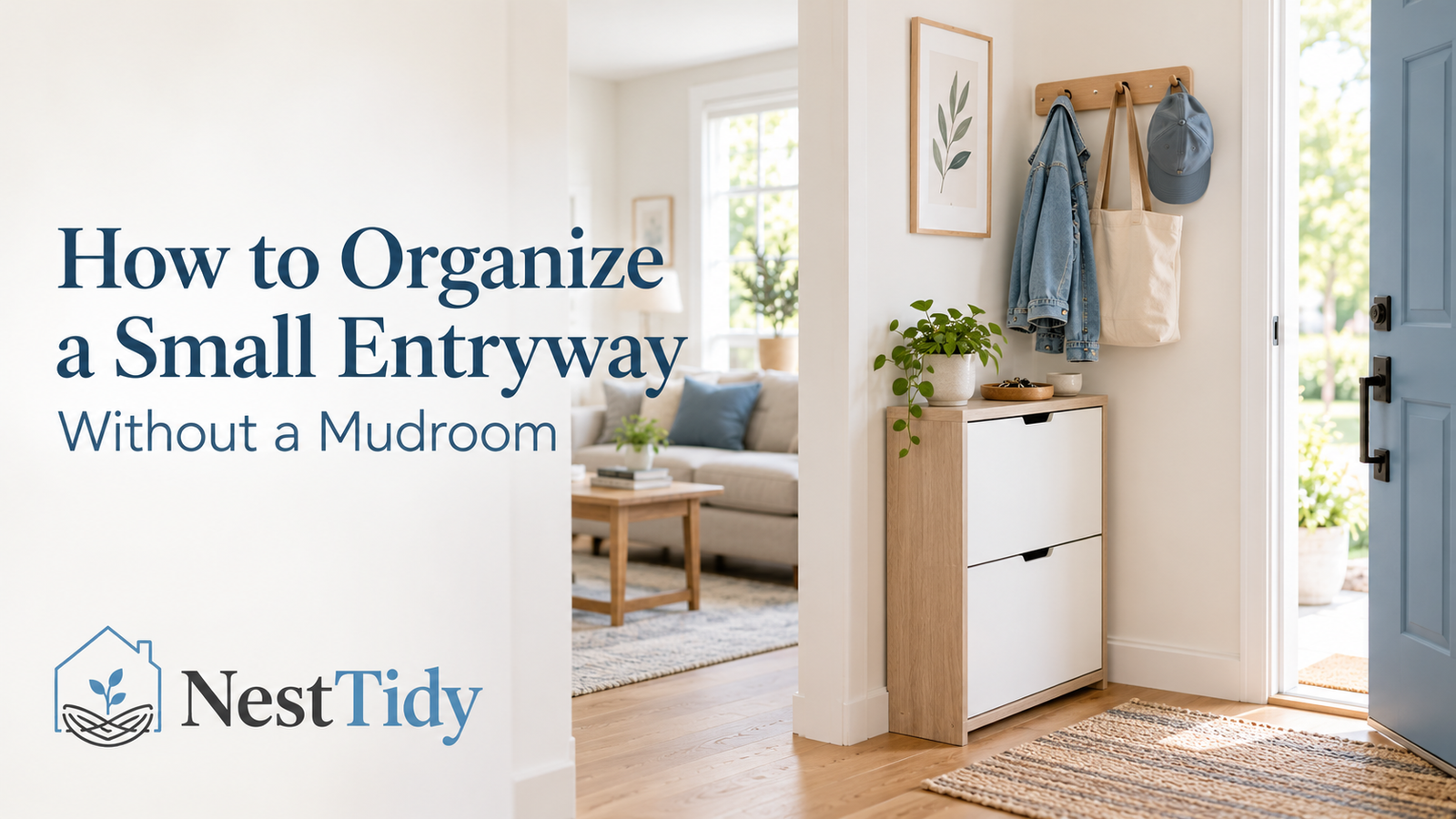
How to Organize a Small Entryway Without a Mudroom
A small entryway can get messy faster than almost any other part of the home. Shoes pile up, bags land on the floor, coats end up on the nearest chair, and keys disappear. If your front door opens directly into a living room or hallway, you may not have a mudroom or even a real foyer. The good news is that you do not need either one. You need a simple landing zone that fits the space you actually have.
Cost
$0 to start
Time
30–60 min to set up
Difficulty
Easy
Renter Friendly
Yes, with suitable options
Key Takeaways
- Keep the entryway focused on daily essentials rather than every item that could be stored there.
- Create a small landing zone even when the door opens straight into the living room.
- Give shoes, coats, bags, keys, and mail clear homes, with sensible limits.
- Protect the walkway and door swing before adding any furniture.
- Use wall space selectively instead of crowding the floor.
- Choose a setup that is easy to maintain on an ordinary busy day.
Why Small Entryways Get Cluttered So Quickly
Small entryways collect clutter because they sit at the point where life comes in and out of the house. Shoes, coats, bags, keys, packages, mail, umbrellas, pet gear, and kids’ items all seem to land there.
Without a mudroom, those things spill into the nearest available spot. That might be a corner of the living room, the back of a dining chair, a kitchen wall, or a hallway with almost no extra space. The result is more than visual clutter: things get misplaced, the door feels crowded, and leaving the house gets harder than it should be.
The goal is not to recreate a full-size mudroom. It is to make the entrance function with the space you already have.
Quick Answer
To organize a small entryway without a mudroom, keep only the items used every day near the door. Create one compact drop zone, assign simple homes for shoes and outerwear, use vertical space carefully, and keep the path clear.
A small entryway should support daily movement, not become storage for everything.
Before You Start
Stand by the door and watch how the space is actually used. Where do people naturally put down bags? Where do shoes collect? What blocks the walkway? What do you need to grab every day?
Sort what is there into three temporary categories: Keep Here, Move Elsewhere, and Remove. A laundry basket, tote bag, or cardboard box is enough. You do not need to buy organizers before you begin.
If several people use the entrance, plan for their everyday habits rather than designing a picture-perfect setup no one can maintain.
01
Identify What Actually Lands by Your Door
Notice the real categories before planning storage.
Look at what truly collects near the entrance: everyday shoes, coats, backpacks, keys, umbrellas, sunglasses, outgoing mail, a dog leash, hats, gloves, or school bags.
The mistake is organizing for an ideal version of life rather than what your household actually does. If shoes always land by the door, they need a practical home there. If bags end up on a chair, the storage you choose should be just as easy to use as that chair.
Done when: you know which items genuinely need to live near the entry and which arrive there only temporarily.
02
Remove Everything That Does Not Need to Stay There
Make room for everyday essentials first.
A tiny entry cannot hold the same amount as a mudroom. Move off-season coats, rarely worn shoes, extra bags, old mail, unnecessary packages, duplicate umbrellas, and items that belong in other rooms.
If your front door opens directly into the living area, this is especially important: clutter by the entrance becomes visible clutter throughout the room.
Aim to keep only things that help people come and go smoothly. Everything else should have a home somewhere else.
Done when: the entryway contains mostly everyday items rather than overflow from the rest of the home.
03
Protect the Walkway and Door Swing
Do not let storage make the entrance harder to use.
Before adding a bench, shoe rack, basket, or cabinet, open the door fully and walk the route people actually take. Consider bags being carried inside, wet shoes, groceries, children, and guests.
- Make sure the door can open and close properly.
- Keep the natural walking path clear.
- Avoid baskets or shoes that become trip hazards.
- Do not crowd access to switches, vents, or other essential fixtures.
- Check that furniture is stable and safely secured where necessary.
A slim cabinet that technically fits is not helpful if it makes passing through the doorway awkward. Keep the entrance functional before trying to maximize storage.
Done when: everyone can enter, turn, and walk through the area comfortably.
04
Create a Drop Zone Even Without a Foyer
Give everyday items one obvious landing place.
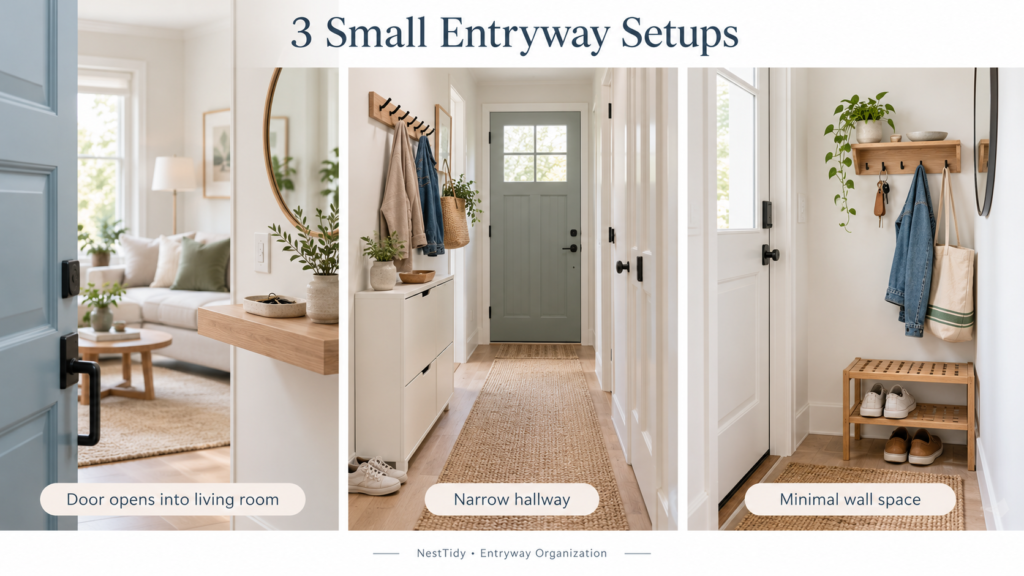
You can create a drop zone with one stretch of wall, a narrow floating shelf, the top of a slim shoe cabinet, a small tray on a console, or a compact corner near the door. It does not have to look like a traditional entryway.
Keep the drop zone focused on a few things people need when leaving or coming home: keys, a wallet, sunglasses, a bag, and perhaps outgoing mail. The goal is a small landing place, not another catch-all surface.
NestTidy Tip
If the door opens straight into the living room, choose a setup that visually blends with the room. A simple shelf and a few hooks often feel lighter than bulky entryway furniture.
Done when: the items that used to get dropped at random have one easy-to-use spot.
05
Give Everyday Shoes One Small Home
Set a limit before shoes take over the floor.
Shoes can make a small entrance feel crowded very quickly. Instead of storing every pair by the front door, make space for only the pairs people use regularly.
- A low shoe tray for a few current pairs
- A narrow shoe cabinet if the walkway allows it
- One small basket for slippers or sandals
- A compact mat area with a clear limit
- A shelf under an existing bench, if there is room
A simple boundary works better than unlimited storage. For example, keep one everyday pair per person at the door, with an additional weather-specific pair only when necessary. Store the rest elsewhere.
Done when: the shoes by the door are limited to regularly used pairs and fit within one defined zone.
06
Use Walls and Doors Without Overloading Them
Free floor space without creating a cluttered wall.
Wall hooks, a narrow peg rail, a small shelf with hooks, a compact key holder, or an appropriate over-the-door organizer can help when floor space is scarce.
Use vertical storage for light daily essentials such as jackets, keys, small bags, hats, a dog leash, or outgoing mail. Avoid putting every coat and accessory on display at once.
If you rent, check your lease and choose hardware suited to the surface. Removable hooks have weight limits, and over-the-door organizers should not interfere with closing the door. Secure heavy or tall furniture according to its instructions.
Done when: wall storage makes the entrance easier to use without overwhelming the room or blocking the door.
07
Make Room for Keys, Bags, Mail, and Family Essentials
Keep smaller daily items from getting lost.
Even when shoes and coats have homes, small items can still take over. Keep things simple with one tray for keys and sunglasses, a hook for each regularly used bag, and a small spot for outgoing mail.
If children use the space, place their everyday items where they can realistically reach them. If you keep pet supplies near the door, give them a small defined location too.
Avoid creating a large miscellaneous basket. Anything that goes into it without a clear purpose will soon become another sorting project.
Done when: small daily essentials are easy to find, put away, and grab on the way out.
08
Test the Setup and Keep It From Filling Up Again
Use normal daily routines to find what needs adjusting.
Try the setup for several days. Do shoes stay in place? Do people use the hooks? Is the key tray overflowing? Does mail accumulate? Are bags still landing on the floor?
Adjust the number of hooks, shoe limit, tray size, or location of one category if the system is not working. The most useful entryway arrangement is rarely the most elaborate one.
Choose one small maintenance habit: reset the area each evening, handle mail when it arrives, rotate seasonal gear, or clear extras once a week.
Done when: the entrance still works after several days of normal use and overflow is easy to spot and remove.
Mistakes to Avoid
- Treating the entryway like a storage room. It needs to support daily movement, not house every extra item.
- Keeping too many shoes by the door. Limit the area to the pairs that are currently used.
- Buying furniture before checking the walkway. A bench or cabinet may take away essential floor space.
- Using too many baskets. Small containers can create visual clutter without solving the underlying problem.
- Overloading one wall. Hooks help, but too many coats and bags can make a narrow entrance feel smaller.
- Letting “just for now” items stay permanently. Give temporary items a deadline or move them to their real homes.
Frequently Asked Questions
How do you organize an entryway with no foyer?
Choose one small place near the door for a drop zone. Keep daily shoes, coats, bags, and keys in compact storage and leave the walkway clear.
What should be stored in a small entryway?
Only the daily items that support coming and going, such as a few shoes, current outerwear, keys, bags, and a limited amount of mail.
How many shoes should stay by the front door?
There is no universal number. Start with the pairs used most often and set a limit that fits your household and the space available.
Is a bench necessary in a small entryway?
No. A bench can be useful if there is enough room, but hooks, a tray, or narrow shoe storage may work better in tighter spaces.
How do I organize an entryway that opens into the living room?
Use visually light storage that blends with the living area, such as a narrow shelf, a few wall hooks, and a small shoe zone. Avoid crowding the doorway.
What is the best storage for a narrow entryway?
Slim-profile or wall-mounted solutions are often more practical than deep furniture, provided they do not block passage or interfere with the door.
Take the Next Useful Step
If you want to make the most of the space you already have, continue with How to Use Vertical Space for More Storage Without Making Your Home Feel Cluttered or How to Declutter a Closet and Keep It Under Control.
A better entryway starts with less stuff, clear limits, and a setup that works in everyday life.
Final Thought
You do not need a mudroom to create a functional entryway. You just need a small system that fits the space you have.
Keep the entrance focused on daily essentials. Protect the walkway. Give shoes, coats, keys, and bags simple homes. Then test the setup before adding anything else. Small entryways work best when they stay simple.